Troves 2e by Sasquatch Games - Review
Created by Cody Barr (Sasquatch Games), Troves is a solo and cooperative dungeon crawler for one to three players. It felt to me like a love letter to old-school adventure games and cartoons, a mix of Zelda and Ducktales, celebrating dungeon exploration and the simple joy of chasing adventure and finding treasure.
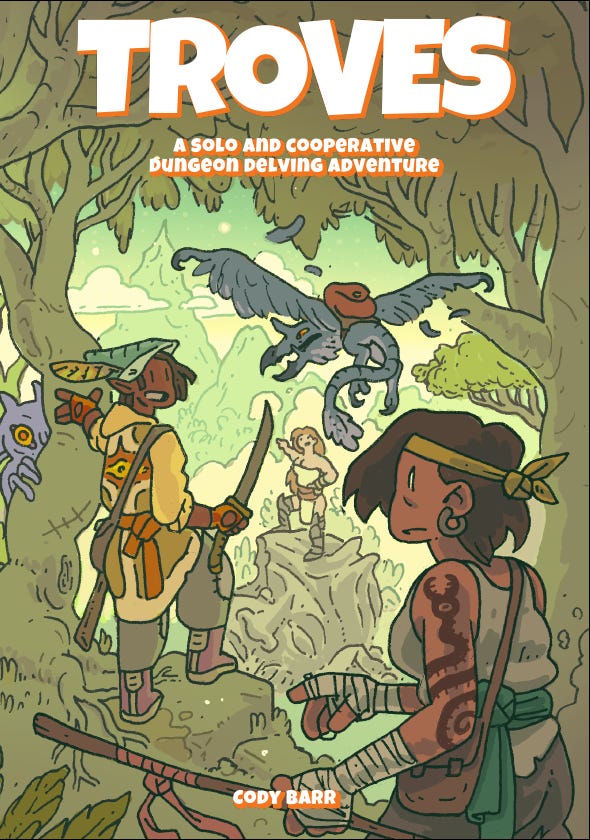
The premise is simple. Create a hero, enter a dungeon, overcome random obstacles, collect loot, defeat the boss, return home richer, repeat.
It’s a fun, creative indie gem that scratches three itches: rolling different dice for a short (or long) while, dungeon crawling with no overhead, and filling out a notebook. After a few sessions, I found it perfect for a quick delve or a longer grind.
Rules-light, fun-heavy
Troves has an approachable system in its 50 pages. Create a character in a couple of minutes, either using one of the pre-made classes or creating your own (with easy-to-follow instructions), choose your Delve, roll on the random tables, make an attribute check or enter combat, get some loot.
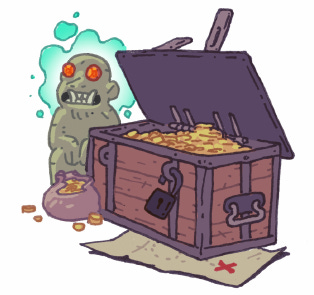
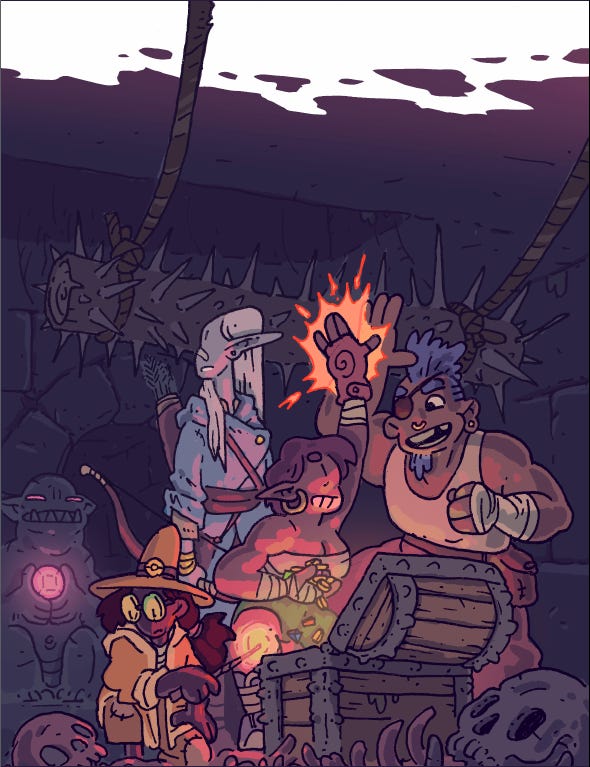
It’s a game that’s easy to pick up and enjoy, perfect for first-time solo players or anyone, solo or otherwise, wanting a few minutes of delightful adventuring. Troves’s lighthearted nature is very well represented through the fantastic art by Drew Shields.
Delves
Delves are the main dungeons, where the meat of the game takes place. They are thematic adventure sites built from randomized rooms/locations, events, enemies, treasures, and equipment.
We can play Troves by simply rolling dice, but you can also generate emergent storytelling. Locations are formed with an Adjective + Noun table to set the mood, create a scene, and spark our imagination.
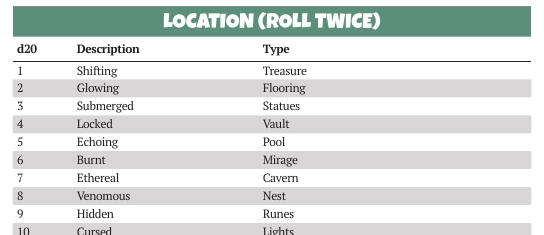
One expedition might have us navigating glowing caverns while fighting dream snakes, while the next sends us through collapsing laboratories filled with malfunctioning machines, or even climbing dangerous peaks and crossing treacherous suspended bridges in the Falling Mountains.
After the description, we roll for an Event. Those can be Trials, Loot, or Combat.
For Trials, we roll for a random Attribute and a difficulty number, then try to pass it with a check. Combats have us rolling for a random enemy. Luck is a stat usually only replenished during Downtime that allows to roll any check with advantage, using two dice and picking the highest.
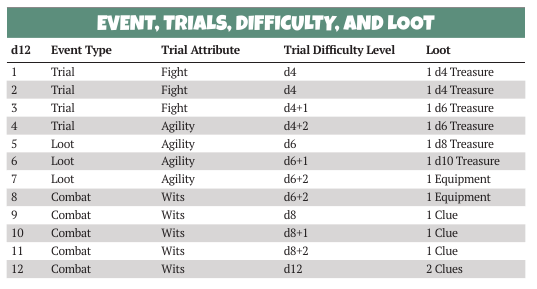
Succeeding at Trials and winning Combat give us a Loot roll.
Loot can give us Equipment, Treasure, or Clues.
Equipment is self-explanatory, but Treasure and Clues are the main resources from a Delve.
Treasure is the main reason we go adventuring. They’re simply named “d4 Treasure,” for instance, and can be interpreted however we want—jewels, coins, trinkets, relics, rare gear, or anything valuable.
After rolling its die value, from d4 to d20, we write down its worth on our character sheet, keeping it safe for selling by completing the Delve and moving to the Downtime Phase. Selling Treasure is the only way to acquire money, necessary to improve our character’s Attributes, learn new skills, and stock on consumables and gear.
Clues represent our progress throughout the dungeon. Once we’ve collected enough, the Finale is triggered, and we face the Delve’s boss fight.
There’s a nice sense of momentum with those mechanics. They also add some anticipation. Falling to the boss carrying a buttload of Treasure is awful, since we lose them all! At least we get to keep any items and equipment found.
The book contains 3 ready-made Delves to teach players how the game works, and a fantastic two-page tutorial on how to create our own Delves, from writing the lore to putting tables together. It’s very easy to design our own adventure sites, weird monsters, and custom items, fitting whatever themes we like.
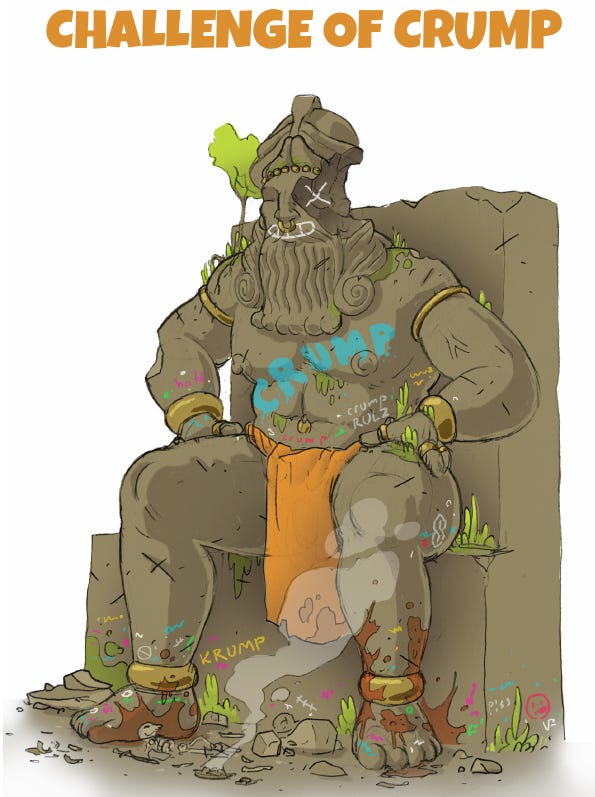
Those 3 Delves, however, are extremely replayable if you don’t want to create your own, even though I think you should.
Characters
Troves has 6 starting classes, or Delvers. Some are classic RPG fare (Ranger, Wizard, Guardian), while others are a little more wacky (Provisioner, Old Delver).
They vary in Attributes, starting equipment, and Abilities. The Soldier, for instance, starts with a Sword that uses Fight as the combat Attribute. However, there’s nothing stopping us from giving him a bow found in a dungeon, making use of his Agility instead.
That would not be optimal, of course, but this isn’t a game for min-maxing. Troves isn’t worried about balance, and it’s a lot of fun testing different gear on different classes.
Character progression happens during Downtime, after completing a Delve. Like I said earlier, we sell Treasure then spend the gold to improve Attributes, learn Abilities, and buy new stuff.
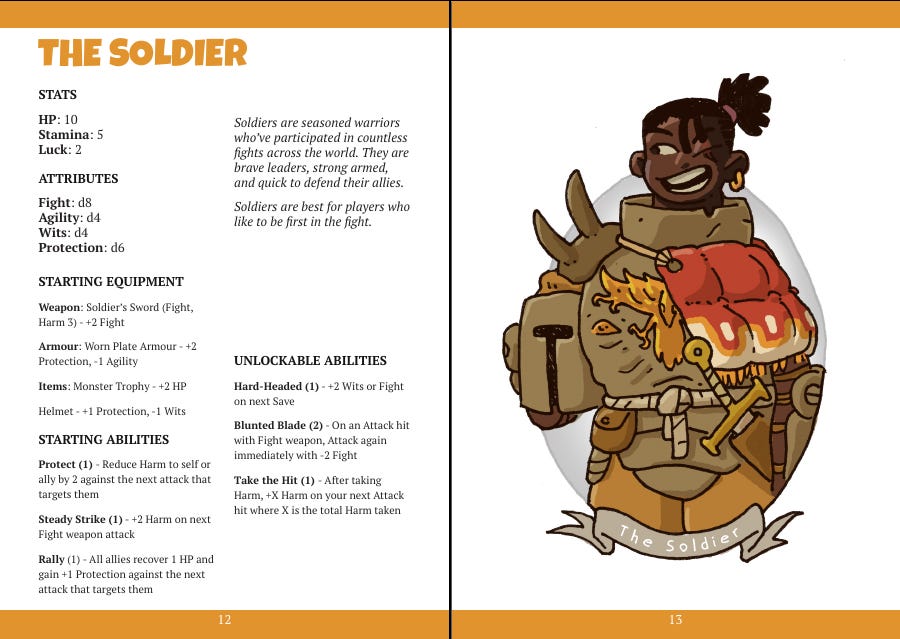
Just like Delves, there’s a handy guide to creating custom Delvers. The book suggests a point-based system, giving us a pool to invest however we want in the base stats. Even creating a class from scratch is easy and quick.
Downtime
Not much to explain as I’ve already touched the main points. After a Delve, we move on to Downtime.
That’s where our hub is, the main location to sell our Treasure for gold, and spend it on upgrades.
Getting Treasure is the ultimate goal of adventuring, and that brings me to my only criticism of Troves.
A minor complaint
One design decision can be a little frustrating: we can’t leave a Delve voluntarily and keep Treasure. Leaving before triggering the Finale and beating it is considered a failure, so we lose all Treasure.
This creates a progression problem that can leave players stuck. If you found a ton of Treasure, reach the boss, and realize you aren’t strong enough to defeat it as you are, well, too bad.
You can’t retreat, move to Downtime, and strengthen your Delver, because that requires gold, and the only way to acquire gold is by selling Treasure, and to bring back Treasure, you have to defeat the boss that’s currently too strong for you.
You’re forced to beat the challenge in order to earn the upgrades that would have helped you beat the challenge in the first place.
While we can still sell any equipment we find for d4 gold, trying to grind that way would become a slog.
It’s not a game-breaking issue by any means. Fortunately, it’s easily solvable with a house rule. I think it’s worth mentioning though, because this is an incredible beginner-friendly game, and not every beginner is comfortable changing rules.
In my opinion, a good compromise is to allow players to abandon a Delve at any time, keeping their Treasure but losing all Clues. They lose progress, but have a chance to come back stronger.
Again, this is a very minor thing, and it doesn’t lessen Troves in any way. It’s just that this all-or-nothing concept feels weirdly at odds with the game’s otherwise cheerful tone.
Final thoughts
Troves is a solo-first gem. It doesn’t demand storytelling skills, heavy time commitments, or roleplaying experience. The random tables provide everything you need to have fun with it.
Combat and exploration are quick and easy, and progression is fun. No overload, extreme crunch, or excessive bookkeeping, just fast-paced adventure and treasure hunting illustrated by incredible art and charming presentation.
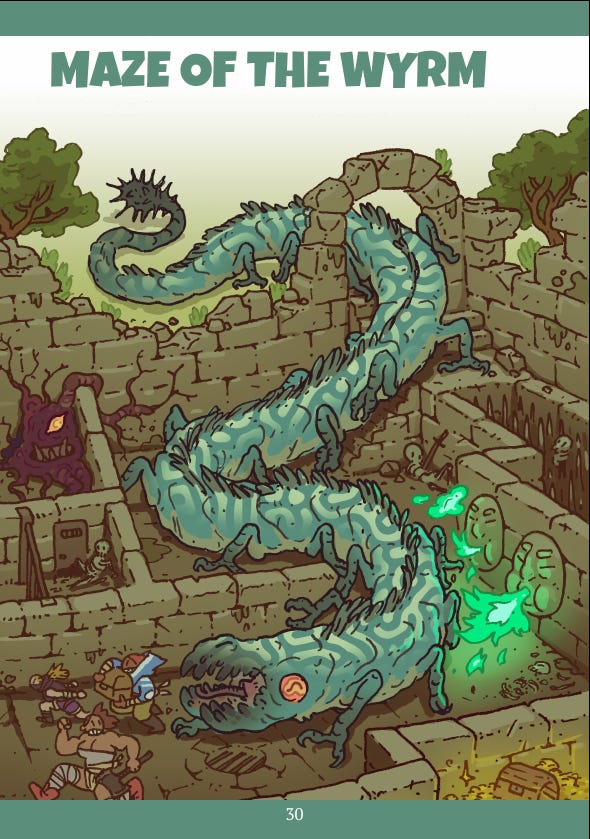
My first Delve, Maze of the Wyrm, went on for 19 areas. I found cool new equipment, some Treasure, and managed to beat the Wyrm by the skin of my teeth, finishing combat with 1 HP!
I sold my Treasure for a total of 49 gold. Unfortunately, it wasn’t enough to upgrade my Guardian, Olbon Bannerlord (named with the Absolutely Awesome Fantasy Names and Names Generator).
This is my second game from Cody (the first being Wanderer, for which I wrote a playthrough), and I can’t recommend them enough for solo players, beginners or otherwise.
Troves 2e is available on Itch.
Support the creator.